
Orange County Three-Day Feed Status
Orange County Corrections does not publish an official 72-hour released-person view. Its BestJail system is a current-custody database. The agency says that current entries update every 30 minutes and a person is removed on release. That design can answer whether someone is shown in jail now. It cannot recreate everyone who left during the prior three days.
The Daily Booking List is not a substitute. Its 24-hour label refers to bookings during a defined intake period. Three copies of that report would produce three days of arrivals, not exits. Likewise, three saved copies of the current roster would still miss people who entered and left between snapshots. The official jail FAQ directs former-inmate questions to the records custodian, making a date-bounded report the correct county route.
The Orange County jail FAQ confirms that released-person information does not remain available on the website.
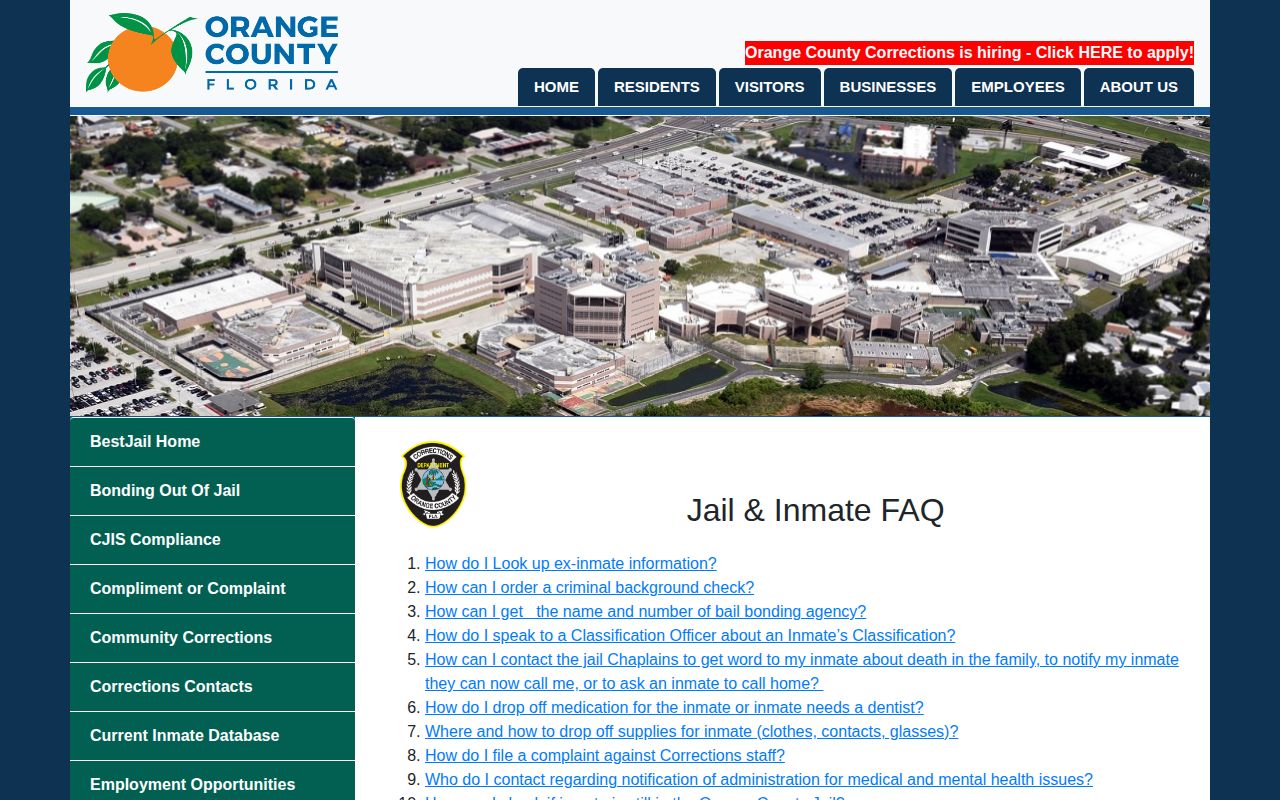
The screenshot reinforces the need to contact the record owner for an actual three-day release history.
Request Orange County 72-Hour Releases
A three-day inquiry works best as one records request with exact beginning and ending timestamps. State the time zone and say whether the end is inclusive. A rolling 72 hours ending Monday afternoon differs from Friday, Saturday, and Sunday as calendar dates. The custodian should not have to infer which meaning was intended.
- Choose the exact start and end date, time, and Eastern time reference for the Orange County release interval.
- Ask for any release log or event report covering that span, preferably in a machine-readable electronic format.
- Identify the fields needed: booked name, booking number, actual release timestamp, release code, authority, and destination.
- Ask that exempt material be redacted while the rest is produced, and request an itemized estimate before a chosen cost limit is exceeded.
- Compare each relevant event with VINE, the Orange Clerk docket, and any named receiving agency.
Orange County Corrections accepts requests through its official public-information channels. The custodian is on the fourth floor at 3723 Vision Boulevard, Orlando, FL 32839. Requests can also be mailed to P.O. Box 4970, Orlando, FL 32802-4970, emailed to OCCDRecords@ocfl.net, or made by calling 407-836-0321.
Florida law requires prompt acknowledgment and a good-faith response but sets no single statewide number of days for completion. Authorized copy or extensive-service costs may apply. Asking for an electronic log, a narrow span, and an estimate can keep the request focused.
Note: One clearly bounded request is more accurate than three inferred daily lists that Orange County never published.
Orange County 72-Hour Record Fields
The county website does not show a public three-day field set. The following table is a request inventory drawn from Orange County's documented release-record path. Actual production may use different labels, codes, or redactions. Asking for these points prevents a bare name list from hiding whether the event was a community release or an interagency transfer.
| Field to request | Reason it matters |
|---|---|
| Full booked name | Starts identity matching but should be paired with an ID. |
| Booking or jail number | Ties the exit to one custody episode. |
| Booking date and time | Separates older stays from a new arrest under the same name. |
| Actual release date and time | Determines whether the event falls inside the precise 72-hour span. |
| Release reason or code | Distinguishes bond, pretrial release, time served, dismissal, sentence completion, and transfer. |
| Order or releasing authority | Connects the jail act to the public court case or agency direction. |
| Receiving agency or destination | Shows whether custody continued with FDC, another jail, USMS, or ICE. |
A “released to” entry often means the county's custody ended, not that all confinement ended. FDC receives sentenced prisoners. USMS or ICE can receive federal or immigration detainees held at the Orange County jail. Another county may act on its own warrant. The destination field is therefore central to a sound three-day release list.
Orange County Weekend Release Checks
The three-day span is most useful when a court event, bond payment, and physical exit fall on different dates. Orange County accepts bond posting at the BRC public windows 24 hours a day, but payment does not complete a release. Corrections must verify the bond, check warrants and holds, move the person, return stored property, and complete final clearance. The county says that bond-release processing can take up to 12 hours.
Orange County also identifies approximate no-release periods during morning and evening headcount and meals. Those pauses can push an expected event later, but they do not create a regular weekend feed. Holidays may affect court and office activity while the jail itself keeps operating. A Friday court order can thus lead to a later physical exit, and the Corrections timestamp controls the actual release record.
For a same-day issue, the narrower Orange County 24-hour release process focuses on current status and immediate verification. Use the three-day window when the exit date is uncertain or the event crossed days.
Note: A court order authorizes an act, while the jail release timestamp records when Corrections carried it out.
Orange County Release Data Quirks
Orange County's most distinctive data rule is immediate post-release removal from the live list. The current roster refresh cadence is not a historical release-log cadence. A person can appear in one update and disappear in the next. That absence narrows the question, but it does not identify the date, reason, or destination without another source.
Web display and legal retention are separate. BestJail shows no post-release history, yet the underlying record may remain with Orange County under an approved retention schedule. The county does not state one universal public retention period for all booking, commitment, photograph, and release records. A request can ask the custodian which record series governs and how far back the requested data are available.
The Corrections records page shows the official request routes used when the roster no longer carries the person.
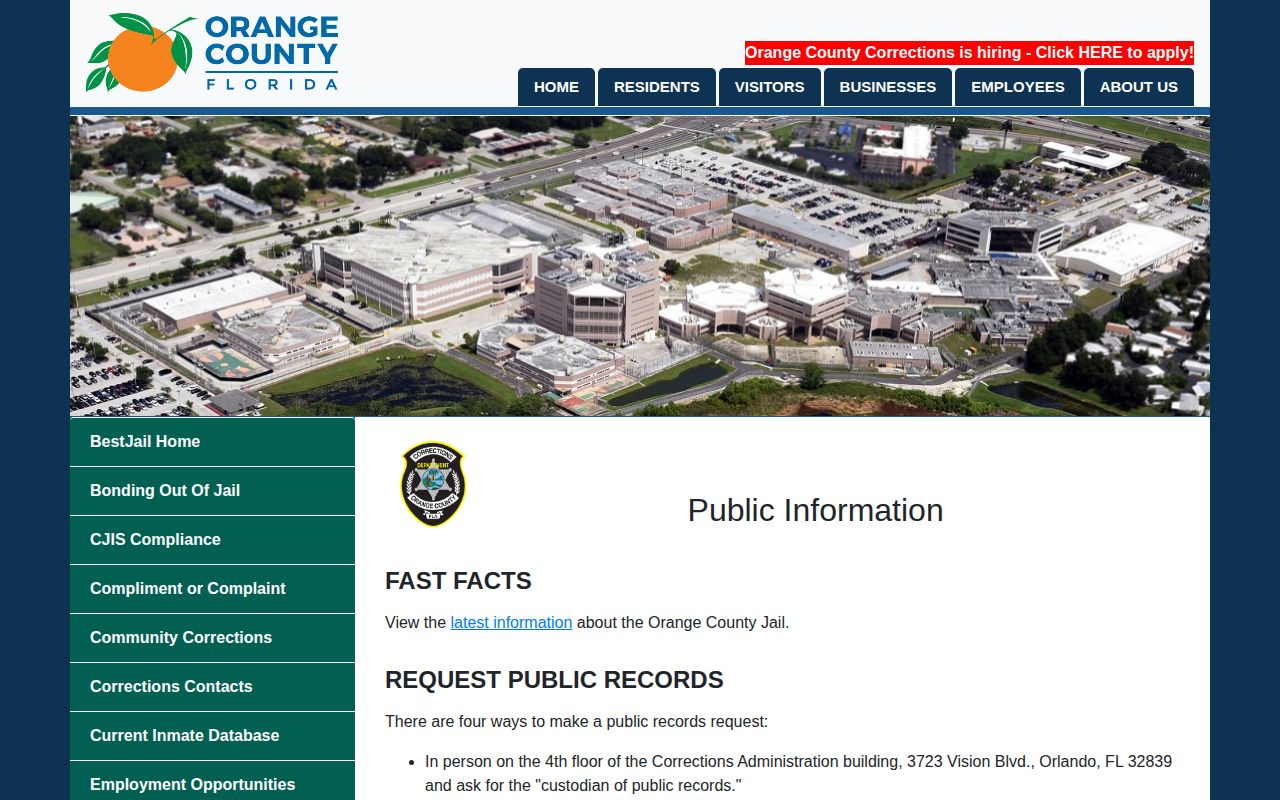
Those channels supply a durable fallback without mislabeling an intake report as a release feed.
Verify Orange County Release Events
VINE adds a time-sensitive layer. Orange County says its county feed sends updates at frequent intervals and can report current location, pending charges, bond, and a scheduled release date when known. A registered alert may flag general release, bond release, court-order release, work release, transfer, or another custody event. It is still a notification system, not the certified county archive.
The Orange Clerk criminal docket provides the judicial side. A public order may show bond action, dismissal, sentence, time served, commitment, or another disposition. The docket may not use the same timestamp or code as Corrections. Match the case number and booking number, then read the signed order when available. For one known former detainee, the Orange County released-inmate search path explains this identity check across systems.
- Release
- An end to the holding agency's custody, which may be to the community or another authority.
- Transfer
- A move into another agency's custody, not freedom from confinement.
- Detainer
- A hold or request by another authority that can alter the planned exit.
- Time served
- A court disposition crediting custody already spent toward the imposed jail term.
Orange County Release System Boundaries
FDC records cover state prison, not a county-only jail stay. When Orange County transfers a sentenced person to the Central Florida Reception Center or another FDC institution, use the FDC population search first. A later state discharge may appear in the FDC Inmate Release Search. FDC also offers monthly OBIS public-data files with released-inmate tables dating from October 1, 1997, subject to lawful removals. Those data cannot be turned into a three-day Orange County jail list.
Federal and immigration checks have different limits. The BOP locator may show a former federal prisoner as released or not in BOP custody with a date. ICE's locator focuses on current detention and is not a release archive. Orange County can hold small numbers for ICE or USMS under agreements. A county record naming one of those authorities should be treated as a transfer until the receiving record proves more.
| Custody system | Correct 72-hour role |
|---|---|
| Orange County BestJail | Checks who is listed now, not who left across three days. |
| Orange County release-event record | Primary source for the county jail's dated exits and transfers. |
| Florida VINE | Supplies event notices that should be confirmed with the source agency. |
| FDC search and OBIS | Covers state-prison population, release, and historical state data only. |
| BOP or ICE | Checks federal custody or current immigration detention within each tool's scope. |
A three-day list is only as accurate as its scope. State the agency, interval, and meaning of “release.” Keep transfers separate from community exits, and preserve the official identifiers that connect each event to its record.