
CFRC East Release Status
The East Unit is an FDC reception or correctional unit. Its location in Orange County does not make it part of Orange County Corrections. A person sentenced to state prison can pass from a county jail into FDC at the reception center, then move among units or institutions as classification and placement decisions are made. Every one of those moves can end a stay at one building while state custody continues.
A release conclusion must therefore name the level of custody. If FDC's inmate population detail shows a current location, the person remains in state custody. If the Inmate Release Information Search shows a future Current Release Date, the date is scheduled and may change. If it shows a completed Release Date, FDC has recorded a past state release. The community-supervision database then answers whether an FDC supervision status followed.
CFRC East Release History
For an older state release, FDC's monthly OBIS public data can supplement the individual search. The released-inmate tables reach releases from October 1, 1997 forward, subject to removals for sealed, expunged, or confidential data. They may include linked root, alias, sentence, offense, detainer, and incarceration-history tables. OBIS remains an FDC dataset. It does not cover a person whose whole custody episode stayed in Orange County jail.
Use the same DC number across the public detail, OBIS material, and a records request. Compare the East entry with the next FDC location and final release date. A gap should be described as a gap, not filled with an assumed discharge. If the older data do not resolve the event, ask FDC for the public movement history and completed release record for a narrow range.
CFRC East Institution Profile
The official CFRC East profile confirms the unit within FDC's current institution list and supplies the agency's public facility details.
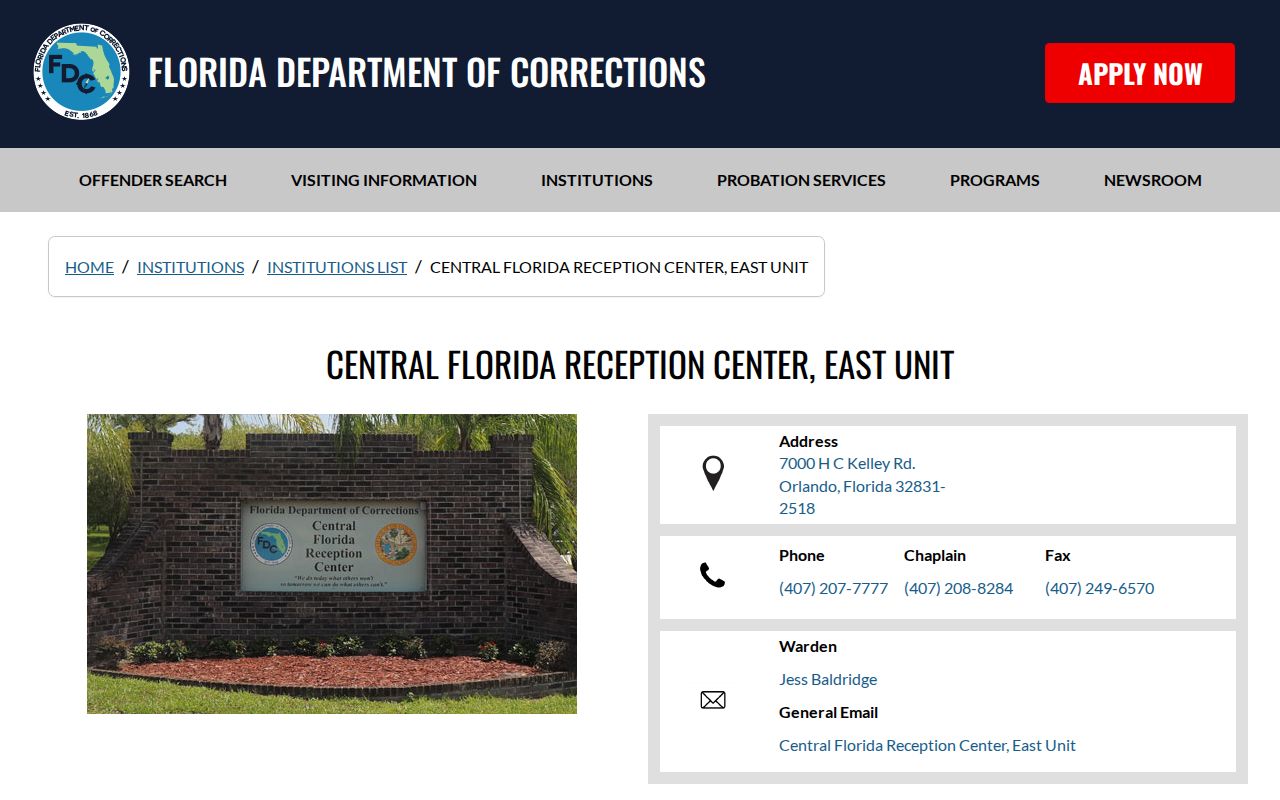
The profile establishes which agency owns the record. That is the key first step. Orange County BestJail removes adults after county release and does not archive state prison movement. The Orange County Clerk can document a state sentence or commitment order, but FDC documents actual reception, current placement, inter-unit movement, and state discharge.
The research identifies East on the CFRC Orlando campus but does not supply a separate street address or direct telephone number. Use the current official profile for those changing contact details. Do not copy Main Unit details into East unless FDC itself presents them as shared.
Lookup CFRC East Releases
Use the FDC Offender Search menu, which separates several datasets. The six-character DC number is more reliable than a name. When it is unknown, use first and last name, check aliases when offered, and compare the result with sentence and case facts.
- Open the inmate population search. Look for a current record and note location, status, sentence information, and DC number.
- If the location changed from East, treat that as a transfer unless the record supplies a completed release event.
- Open the Inmate Release Information Search. Search by DC number, then name or release-date range if needed.
- Distinguish Release Date from Current Release Date. The first records a completed event; the second is FDC's public scheduled-date label.
- Open the community-supervision search when the record or court case indicates supervision after prison.
- If no public result resolves the move, file a focused FDC records request for movement and discharge documents.
FDC says its release search updates nightly and does not include county jail or county probation records. A same-day change may not appear at once. Confirm urgent status through the agency rather than filling the delay with an assumption.
Note: A roster or locator delay changes what is displayed, not the legal meaning of a transfer or release.
CFRC East Transfer Evidence
Several fields can look like release facts when read alone. A location change says where FDC now places the person. A Current Release Date forecasts an expected state release. An incarceration-history entry records a segment of custody. The completed Release Date is the public field most directly tied to departure from FDC custody.
| Record result | Correct reading |
|---|---|
| East replaced by another FDC location | State custody continues at the new unit or institution. |
| Current Release Date in the future | Scheduled FDC date, subject to lawful change. |
| Release Date completed | FDC recorded release from the state prison episode. |
| Active community supervision | Outside prison under the FDC supervision type shown. |
| No result | Check identifiers, other databases, records, and possible receiving custody. |
Florida Statutes § 944.275 calls the gain-time projection a tentative release date. Court credit, gain time, forfeiture, legal review, new sentences, detainers, and corrections to sentence data can move it. Never promise a release based solely on the scheduled value.
CFRC East Release Records
When public search fields are too thin, request the exact event from FDC. Give the DC number, full name, East Unit, date range, and the type of record sought. Useful targets include admission or assignment to East, movement from East, destination institution, completed release or discharge record, and the public portion of the authority recorded for the event.
FDC applies confidentiality rules under § 945.10. Medical, victim, security, and other protected information may be withheld or redacted. Ask for segregable public portions rather than demanding an entire institutional file. A narrow event request is easier to search and is less likely to gather unrelated protected facts.
Central Florida Reception Center East Unit
Agency: Florida Department of Corrections
Location: CFRC Orlando campus
Current contact: Use the official FDC East profile
Records: FDC public-record request process
Keep the FDC result beside the Orange County court order when the sentence originated locally. The court record shows the judicial act. FDC shows when the state received, moved, or released the person.
Match CFRC East Records
Identity matching is essential across three CFRC units. A familiar name plus an Orlando address is not enough. Compare the DC number, full name and aliases, birth information when lawfully displayed, sentence county, offense and case, admission date, and incarceration history. A DC number stays the most useful key across population, release, and supervision searches.
Unit labels can also vary in a history. Record the wording FDC actually uses rather than forcing all entries into “East release.” The person's last East date may only mark departure from that unit. Find the next FDC location before deciding that the state custody episode ended.
- DC number
- FDC's stable offender identifier used across its public databases.
- Classification
- The FDC process used to assess and assign a person within state corrections.
- Transfer
- A move that changes location while custody continues.
- Release
- The recorded end of the FDC prison episode, subject to any later custody or supervision.
Trace CFRC East Discharge
A completed state release can lead to community supervision or to another authority. FDC's supervision record may show Active, Active Suspense, Absconder, or another exact status. Active means supervised in the community. Active Suspense means direct supervision is paused because the person is in custody or another setting while the officer monitors the case. Do not collapse those labels into a generic claim that someone is “free.”
A detainer or receiving-agency entry may point to county, federal, or immigration custody. FDC's release records departure from the state prison episode, not the end of every possible legal hold. Use the named receiving system to continue the trace. The Orange County release search path explains how county jail, FDC, BOP, and ICE records differ.
End with a statement the records support: currently held by FDC, moved from East to another FDC location, scheduled for release, released from FDC on a date, or supervised in the community. That wording preserves the crucial distinction built into the East Unit record.